
When it comes to yellow fever vaccination, many Canadian travellers assume that Canada decides whether the vaccine is required for certain destinations. In reality, Canada does not set yellow fever entry rules. Instead, each destination country creates its own border requirements, and Canada advises travellers to follow them while also recommending vaccination for medical safety when visiting areas where the disease is endemic.
Below is a clear breakdown of how Canada frames yellow fever requirements, how endemic risk differs from entry rules, and what Canadian travellers need to know before planning their trip.
Canada’s guidance comes through the Public Health Agency of Canada (PHAC). PHAC makes two key recommendations for travellers:
You should receive the yellow fever vaccine if you are travelling to:
Canada also notes that some countries require proof of yellow fever vaccination based not only on your destination, but also on where you have recently travelled or even transited (such as layovers in endemic zones).
To provide accurate information, PHAC directs clinicians and travellers to the World Health Organization (WHO) lists, which include:
These WHO-designated lists are internationally recognized and updated regularly.
One of the most important distinctions Canadians often miss is the difference between disease risk and border rules.
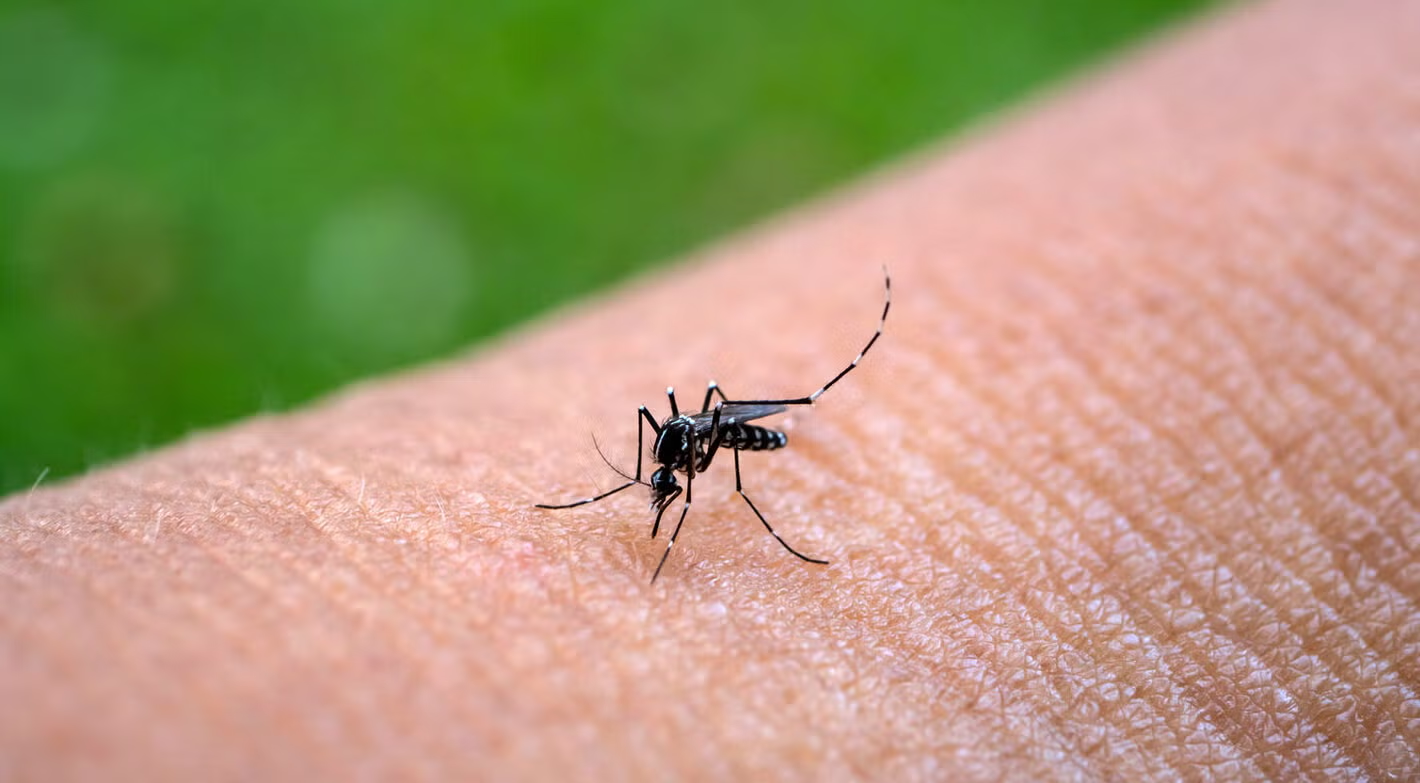
These are countries where yellow fever transmission occurs, meaning you may be exposed to infected mosquitoes.
Many endemic countries do not require proof of vaccination for entry, but Canada may still recommend vaccination because of health risk.
Some countries require travellers to present a valid International Certificate of Vaccination or Prophylaxis (ICVP) for yellow fever.
This may apply:
Because of this, Canada’s guidance must remain flexible:
When Canadians ask, “Do I need the yellow fever vaccine for my trip?”, the answer has two parts:
Look up each country on your itinerary and determine:
Regardless of border rules, Canada recommends yellow fever vaccination for:
This is a health protection decision, separate from legal entry requirements.